Funny Example of Fundamental Attribution Error
Natalie Frank, a Ph.D. in clinical psychology, specializes in pediatric psychology and behavioral wellness.

My personal feel with fundamental attribution mistake
Fundamental Attribution Error
How many times have you lot been in the automobile, minding your own concern, trying like a safety commuter, relaxing, listening to a favorite song when WHAM! Someone turns out of a side street correct in forepart of y'all. You slam on your breaks, java goes flying, and all the stuff neatly organized for that day lands on the flooring. And the person who cutting y'all off? They merely go along going, non fifty-fifty noticing how close they'd come up to causing an accident while leaving you yelling and screaming.
What Is the Key Attribution Mistake?
The fundamental attribution error is the tendency for people to over-emphasize dispositional or personality-based explanations for behaviors observed in others while under-emphasizing the function and power of situational influences on the same behavior. Of class, when our own behavior is less than perfect we believe that'south because of the situation we're in not anything having to exercise with united states personally, (Druker, 2010). This bias is most likely to occur when the behavior in question tin can be viewed negatively.
In other words, people tend to take a default assumption that what another person does is based more on what "kind" of person he is, rather than the social and ecology forces influencing them. This default assumption oft leads to erroneous explanations for beliefs. This general bias to over-emphasizing dispositional explanations for behavior at the expense of situational explanations is much less likely to occur when people evaluate their ain behavior.
A Personal Case of the Fundamental Attribution Fault
A similar experience happened to me this week during a rainstorm. I'thou convinced that whenever it rains and I accept to get to work there is a conspiracy in operation carried out by the other drivers on the route. This time as usual I terminate up backside a auto traveling at ten miles an hr. My immediate response was, "For God's sake what is the matter with you lot? I take to be somewhere!"
I pass in a skid of h2o, bellyaching at their thoughtlessness. And so, before I can get up much above xx a car turns out in front of me – another 10-mile-an-hour driver.
"Move. Motility," I say loudly every bit if they can hear. I try to laissez passer only to realize there'south a truck heading for me in the other lane so I'm stuck. "Would you lot motion already?" I readdress the car in front of me. "Why tin can't y'all just turn off? In that location'south a street right there. What's the affair with you? It was a perfectly practiced street!" I fail to consider the possibility that the street doesn't lead to where they are going.
Somehow I manage to laissez passer that car also at some point only to find myself behind a car going xx. I clamp my teeth, but I know I can pass right up ahead. Or then I call back.
"No!" I scream as a car pulls out in front end of the one going xx miles an hour, only it'due south doing x miles an hour so the car in front of me hits its brakes, as practise I, all the while shouting most the various defects each driver clearly possesses.
I won't take you through the whole drive only just assume it was more of the same - me fuming and yelling insults at the drivers who won't drive the way they should so I tin can go to work on time.
I enter in a whirlwind and all because I had been surrounded past a cast of the stupidest, near selfish, craziest idiots on the planet. If it hadn't been for them, things would take gone just as I'd planned.
Coincidentally, when I get to the classroom, before the lecture starts a student asked if I can explicate the Fundamental Attribution Error as he hadn't understood it in the book. I just stare at him for a minute, then think, "Oh boy, can I e'er explain it. With examples."
Realizing that was exactly what I'd just been engaging in, I felt chagrined. Simply then I soothed myself past pointing out that it does accept the word fundamental at its showtime so it must be something we all do.
A Classic Demonstration of the Fundamental Attribution Mistake:Jones and Harris (1967)
In an early written report that demonstrated the primal attribution bias, subjects listened to pro-and anti-Fidel Castro speeches. Subjects were asked to rate the pro-Castro attitudes of both. Results showed that when the subjects believed that the spoken language makers freely chose which position to take (for or confronting Castro), they naturally rated the people who gave the pro-Castro speeches as having a more positive attitude toward Castro.
Yet, when the subjects were specifically told that the speech makers gave either a pro- or an anti-Castro voice communication based solely on the outcome of a random coin flip, the subjects even so rated the people who gave the pro-Castro speeches every bit having a more positive attitude towards Castro than those giving anti-Castro speeches.
Whorl to Continue
Read More From Owlcation
Thus, even when subjects were aware that the speeches given were assigned randomly not on personal opinion, they committed the fundamental attribution error when it came to judging the motivation behind pro or anti-Castro attitudes of the spoken language makers.
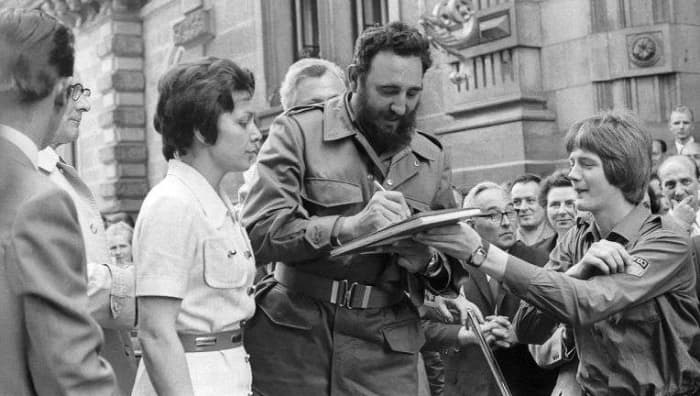
The fundamental attribution error is enhanced when people's actions are attributed to random assignment
Another Everyday Case of the Primal Attribution Fault
You are walking up to a cashier at the grocery shop to check out. Earlier you lot can go in that location a harried-looking older human with two children who are yelling for candy confined, tugging on his coat, then taking off towards the gumball machines right by the store entrance, cuts directly in front of y'all, arriving to pay the cashier before you lot. What are your assumptions about the homo?
You lot might answer by grumbling, thinking "What an incredible jerk!" Yous might give him a dirty await hoping he catches it and moves behind you. Depending on how fumed you lot are y'all might even say something directly to him like "Apparently yous didn't notice I was earlier yous and perhaps no i told you it'south rude to cutting in line." The lesser line is that your default supposition is probable that the person is ill-mannered and rude.
Even so could there be other less negative and more understandable reasons for his behavior? For instance, what if you larn that the man never saw you. That he is a grandfather trusted with two unruly grandchildren for the day, and his attending had been focused on keeping the two children with him fearing something could happen to them if they run from sight. This is while he is also attempting to keep them nether command and resist their demands and pleas for candy—a definite rule fix down by his girl all while attempting to attain the cashier. Thus, your dispositional attribution for his behavior was, in this example, wrong. The human being merely did non see you as his attention was focused on keeping his grandchildren safe.
Why Does the Fundamental Attribution Error Occur?
Jones & Nisbett, (1971), provided the initial theory to explicate these biases. Termed the Actor-Observer Bias, they suggested that these errors are based on an individual'due south perspective. When we focus on others' behavior, the person is the primary reference signal every bit nosotros don't have others and accept no information about their situation. When nosotros focus on our own beliefs, nosotros are more than aware of what external forces may be influencing us. This is because we know the details of our own situation. So, our explanations for other people's beliefs are more likely to focus on the person we are observing instead of whatever possible situational forces that may be influencing their behavior in ways we are unaware of. Instead, when we are explaining our own behavior this is reversed.
More than recent social psychology inquiry has determined that there are two other explanations for the Fundamental Attribution Fault that clarify and add to the theory presented in a higher place (Gilovich et al., 2013).
The first of these explanations advise that people are more salient than the environment. It has been shown that we are more likely to attribute causation to what tin be observed and is more salient rather than what is an unobserved and less salient event. Since people are more than salient and the environment is less salient, we are more than probable to attribute causation to an observable actor who is part of the event rather than the situational factors related to the event (Granot & Balcetis, 2013)
The second of these explanations has to exercise with comfort, predictability, and justice. This explanation is known equally the Just Earth Hypothesis (Montada & Lerner, 2013). Studies have shown that when unexpected events occur, people feel more comfortable when they aspect someone's behavior to their character traits rather than situational factors (Gilovich et al., 2013).
When we observe unpredictable and unexpected events, we fear that these events may happen to us too. The idea that an exceptional candidate could lose a job to a mediocre candidate or that someone's spouse could be murdered in random violence is frightening when we believe that these things could occur to anyone at any fourth dimension. They are much less threatening when we believe that at that place was something wrong with the job candidate or that the person'due south spouse did something to cause them to be murdered.
Contempo theories advise that these explanations likely piece of work together to create the Primal Attribution Mistake (Bob, 2018). These studies suggest that there isn't a single explanation for this bias but rather, that different situations lead to differences in the reason the attribution mistake occurs. It is also possible that in some situations, these explanations might occur independently of each other while in other situations they may occur simultaneously.
How to Reduce These Errors
A number of "debiasing" techniques have been found effective in reducing the effect of these errors accept been proposed by Lilienfeld, Ammirati & Landfield, (2009). These include the following:
- Sentinel out for overgeneralizing which may be indicated past using words like always and never when explaining others' behavior.
- Take heed of "consensus" information. If well-nigh people comport the same manner when put in the same situation, and then the situation is more likely to be the cause of the behavior.
- Ask yourself how you lot would behave in the aforementioned situation.
- Look for unseen causes focusing on factors you would not unremarkably take notice of.
- Regarding your own behavior, reflect on whether information technology was truly just the state of affairs or if something about you may have contributed to the problem.
- Try reality testing. Run the situation by close friends or relatives and get their feedback. You may larn some important things about yourself you hadn't or didn't want to realize.
- When all else fails, simply ask the person why they are behaving the manner that they are instead of making assumptions.
References
Bobb, A. (2018). How does the human mind work? Cognitive biases in everyday life. Euromentor Journal, 9(1), 55-66.
Druker, M., (2010, March 15). The Fundamental Attribution Mistake in Transportation Choice. Psystenance.com.
Granot, Y., & Balcetis, Eastward. (2013). Fundamental attribution fault. The Encyclopedia of Cantankerous‐Cultural Psychology, 2, 576-578.
Jones, East. E. and Harris, 5. A. (1967). The attribution of attitudes. Journal of Experimental Social Psychology, three, i-24.
Jones, E. E., & Nisbett, R. E. (1971). The histrion and the observer: Divergent Perceptions of the Causes of Behavior. New York: General Learning Press.
Montada, L., & Lerner, M. J. (Eds.). (2013). Responses to victimizations and belief in a just world. Springer Science & Business Media.
Natalie Frank (writer) from Chicago, IL on Nov 19, 2018:
I like your suggestion, Liz. It's ever good to work on being a niggling more lenient and generous in thoughts, speech and actions regarding others. Thanks for commenting.
Natalie Frank (writer) from Chicago, IL on November 19, 2018:
I hold with you Pamela, things happen for a reason. Your point about when we are most probable to make snap judgments and negative ones to boot about others is a good 1. When our patience is brusque nosotros are most likely to lash out at others whether it is fabricated known to them or non. Good intentions seem to only work when nosotros are already in a good mood and indeed can wing out the window when our mood is not so adept. Thank you for reading and for the comment. Have a wonderful Thanksgiving.
Natalie Frank (author) from Chicago, IL on Nov xix, 2018:
Thanks for the comments, Dora. I'1000 glad the data was presented in an understandable way and that you found you could chronicle to it. I'one thousand not sure if you gloat Thanksgiving but if and then accept a wonderful holiday.
Natalie Frank (writer) from Chicago, IL on Nov 19, 2018:
Your example is pretty amusing though underscores your betoken perfectly. The assumptions we brand about others attributing causes for the behavior based on who we think they are can be way off the mark. Yet if someone does this to united states of america we are quick to get upset. I'm glad yous enjoyed the article and that it hitting dwelling for y'all. Thank you for the comment. Have a wonderful Thanksgiving.
Liz Westwood from Uk on Nov 12, 2018:
I relate a lot to what you lot say in this article. Is the moral of the story that nosotros should all exist a lilliputian more lenient, thoughtful and considerate towards others?
Pamela Oglesby from Sunny Florida on November 11, 2018:
It is interesting how y'all had the horrid drive to piece of work before answering the young man'south question near attribution. Information technology is easy to make quick assessments virtually another individual, particularly when they cutting in line at the grocery store or on the highway. The studies y'all included were and so interesting equally well.
Your article gives the states something to consider. I endeavor non to rush to judgment, yet when I am running late for something, too tired or even too hungry the skillful intentions tin can fly right out the window.
Dora Weithers from The Caribbean on November eleven, 2018:
You explained and illustrated this concept very well. Your everyday case is so relatable and your tips on reducing the error are very helpful. Good read!
Doris James MizBejabbers from Beautiful South on November 10, 2018:
Marie, your traffic example striking me squarely between the eyes. When I was a 30-something "hot" driver, one day I went around a guy driving 20 mph in a 45 mph zone. Then I got caught by a traffic low-cal. I glanced upward in my rear-view mirror just in fourth dimension to see him making foreign motions as his Plymouth crashed into the rear of the Buick I was driving, caving it in. The guy's brakes had gone out, and instead of calling a tow truck, he was trying to get his brakeless vehicle home. That certainly changed my impression of creeping drivers. At present I call back twice near passing around and getting in front of a slowly moving vehicle. LOL
"The fundamental attribution error is the tendency for people to over-emphasize dispositional or personality-based explanations for behaviors observed in others while under-emphasizing the function and power of situational influences on the aforementioned behavior."
This is a good article, and I particularly agree with your quote above. Sometimes we generalize and tar people with the same brush, to speak. Many times our first impressions tin be incorrect impressions. Occasionally, a person just doesn't know how to make a proficient impression, and one has to go to know him to sympathize what a good Joe he actually is.
holtzclawstriguaide1967.blogspot.com
Source: https://owlcation.com/social-sciences/The-Fundamental-Attribution-Error
0 Response to "Funny Example of Fundamental Attribution Error"
Post a Comment